Why Clear Snow Around Exhaust Pipes?
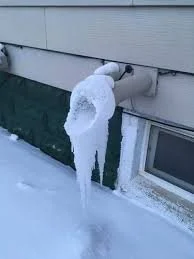
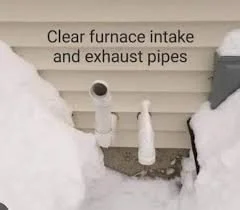
Because snow can mess with both safety and how the system works—especially on high-efficiency furnaces and boilers.
Here’s the breakdown in plain terms:
1. They must breathe
High-efficiency units (90%+ AFUE) use PVC or similar plastic pipes for exhaust—and often a second pipe for intake air. If snow buries or blocks either one:
Exhaust gases can’t escape properly
Fresh air can’t get in
That can cause the system to shut itself off or run poorly.
2. Carbon monoxide risk
If exhaust can’t flow out freely, gases can back up. Modern systems usually have safeties that trip first, but a blocked exhaust still raises the risk of carbon monoxide getting where it doesn’t belong. That’s the big safety concern 🚨
3. Ice buildup makes it worse
Warm, moist exhaust air hits cold outdoor temps → condensation → freezing.
If snow is already packed around the pipe, it’s way easier for:
Ice to form inside the pipe
The opening to seal over completely
4. Efficiency + reliability
Even partial blockage can:
Reduce efficiency
Cause short cycling
Trigger error codes and shutdowns (often at the worst time—like during a deep freeze)
5. Code requirements assume it stays clear
Venting rules assume the termination stays above expected snow levels. Big storms or drifting snow can defeat that assumption, so manual clearing is sometimes necessary.
Bottom line
Clearing snow keeps:
Exhaust flowing
Carbon monoxide moving safely outside
Your system running instead of locking out on a cold night